

FAQs
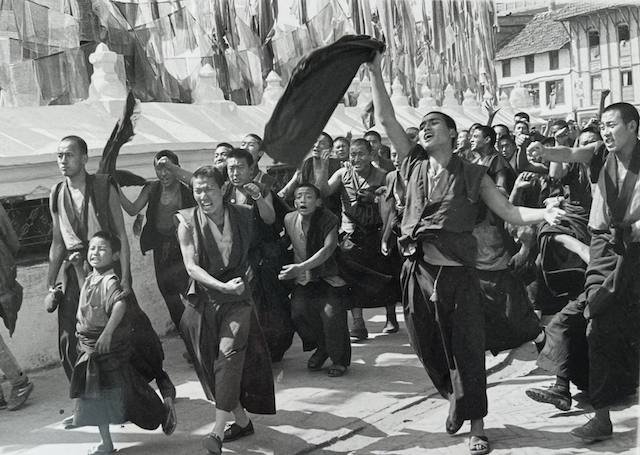
Photo of protest March 10, 1992, Kathmandu, by Erin Potts
Your Questions, Answered
We’ve gotten a lot of questions over the years about the concerts, activism, music, Tibet, all of it. So here are a few of the ones we got asked frequently.
Got a question that’s not on this list? Email us at hello@freedomneedsasoundtrack.com.
-
Yes, people really asked that, especially early on.
At Lollapalooza, Erin had a booth with a big sign that said: “Free Tibet! Help end the Chinese occupation.” One day, a kid walked up, pointed at the sign, and asked, “Ma’am, how do I get a free Tie-bet?”
He thought she was giving something away.
Erin explained that she wasn’t handing out a “Tie-bet.” She was talking about a country under occupation, and about how he could help support Tibetans in their struggle for freedom.
Honestly, that moment said a lot about why the concerts existed. So many people knew nothing about Tibet. The concerts were a way to change that.
-
Not smoothly.
People sometimes talk about the concerts like their success was inevitable. It definitely was not. We were young, figuring it out as we went, and we failed three times before the first concert finally happened in San Francisco.
We tried the National Mall in Washington, D.C. That fell through. We tried working with partners who did not share our vision. That did not work either. Each failure taught us something. Each time, more people joined in to help.
By the time the first concert was actually happening, our tiny San Francisco office was chaos. We did not have enough desks, so people worked on the floor. It always smelled like coffee, bagels, and Indian pizza. (Thank you, Zante’s Pizza!)
This was 1996, so most of the work happened by phone and fax. Checking email meant dialing in, and we only had one computer that could do it. Everyone signed up for 15-minute turns.
And we weren’t even trying to build a regular benefit concert. We were building something new: a message concert. The point was the message, not the money.
So we did not take corporate sponsorship. We did not sell alcohol. We covered logos, even on drink cups. And we kept tickets low: twenty-five dollars for that lineup.
We hung giant Tibetan flags behind the stages, strung miles of prayer flags, and built a monastery tent where monks and nuns conducted rituals.
In the 1990s, all of that was illegal inside Tibet.
It still is today.
After three failed attempts and a lot of chaos, 100,000 people filled Golden Gate Park. Millions more watched on MTV, and the concert became one of the first major events broadcast live on the internet…which, because it was the 1990s, we called a cybercast.
-
Nope, they were friends with Adam and wanted to support what he was trying to do. We got them coach tickets for flights and they paid for their own upgrades. While we didn’t pay them or fly them as they are accustomed to, we did make sure that we had the best sound system and the safest barricades available.
-
At its heart, it was a fight for freedom.
Tibetans are rooted in nonviolence and facing a brutal occupation. At the time, politicians were not rushing to take it on, and many people in the West knew almost nothing about what was happening in Tibet.
But the people who did learn about it were moved. They saw a people risking everything to protect their culture, faith, identity, and basic freedom. And they wanted to help.
That is where the Tibetan Freedom Concerts came from. If politics was not making enough room for Tibet, maybe music could. The concerts turned hope into action and gave thousands of people a way to use their own freedom to stand up for someone else’s.
That momentum is part of why Tibet has not been forgotten. It helped bring new people into the movement, support Tibetan leadership, and keep the fight for human rights and freedom alive.
-
Like most Tibetans, Deyden cannot go to her own country without Chinese government escort to monitor who she talks to. As a Westerner, Erin has been able to go to Tibet twice. The first time, in 1993, was actually pretty intense. In episode two of Freedom Needs a Soundtrack, you can hear more about how she witnessed Chinese police shooting at peaceful Tibetan protestors. That experience really changed her, and it is a big part of why Adam and Erin started working together.
-
Ha. Erin gets asked this all of the time. Here’s her answer: The Tibetan Freedom Concerts made sense for that moment. The real question is not whether we recreate what we did in the 90s, it’s what kind of culture and action does this moment call for?
All of that said, I still have one more concert left in me to produce: The Tibet Is Free Concert.
-
No, they didn’t fail.
But they also didn’t “free” Tibet in some neat, storybook way. We never expected them to because that’s not how change works.
The concerts were never the whole movement nor the entirety of the work. They were a spark.
We always knew the most important work began the day after the concerts, when we had to turn all that energy into action. And so that' was a big focus. The day after the first concert, we organized a demonstration at the Chinese Consulate in San Francisco. Hundreds of people showed up. A small group of us blocked the entrance and risked arrest. Adam and Erin were among them.
The police took them to the station, processed them, and never charged them. They basically detained them and told them not to do it again.
In the months after the concerts, Students for a Free Tibet, our partner organization, exploded in growth. Political prisoners were freed. A new generation of leaders emerged. A lot of people found their way into lifelong activism through the concerts.
And 30 years later, we’re still hearing new stories about their impact.
So, yes. Tibet is still not free.
But the question is not, “Did the concerts fail?”
It’s, “What did they make possible?”
And what do we do now?